
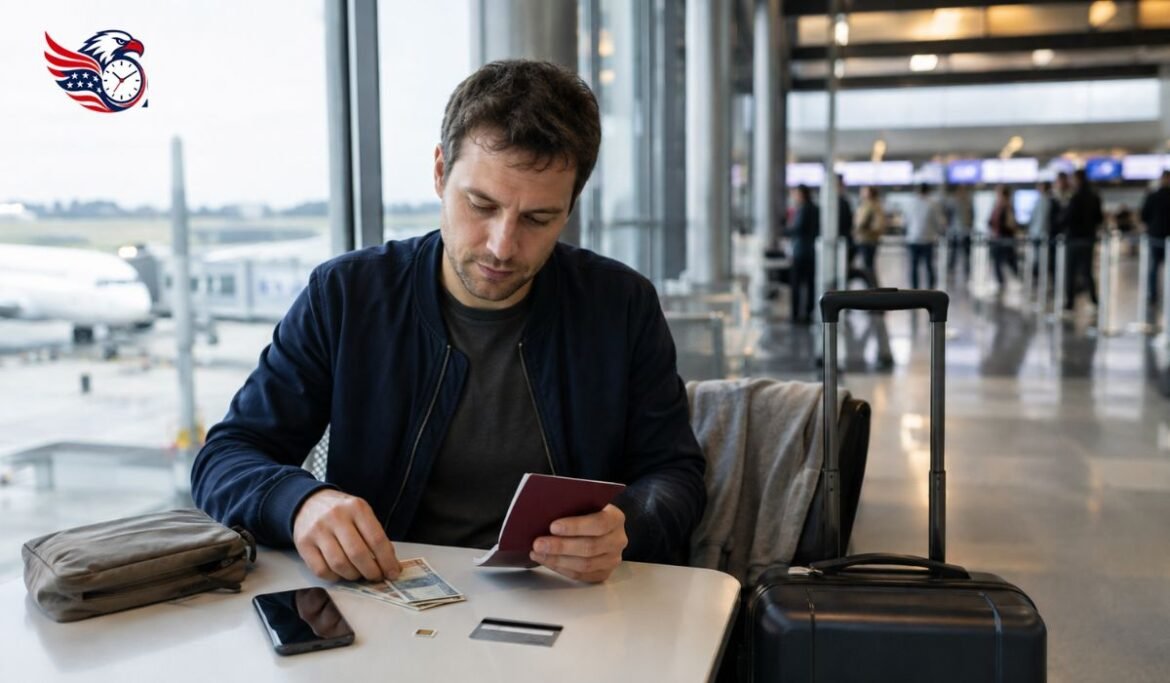
Getting ready for your first big trip can feel like a lot at once. Between packing, booking flights, and figuring out where you’ll sleep each night, it’s easy to overlook the small details that make travel smooth instead of stressful. Money, phone service, and airport routines are three of the biggest stress points for new travelers, yet they’re also the easiest to prepare for once you know what to do. This guide walks through practical, easy-to-follow advice so you can handle your cash, stay connected, and move through airports with confidence. These are the top travel tips for beginners that experienced travelers wish someone had told them before their first trip.
Getting Your Money Ready Before You Leave
Before you even pack a bag, take a little time to think through how you’ll pay for things once you land. Most travelers do best with a mix of payment methods rather than relying on just one. Bring a debit card, a credit card, and a small amount of local cash for your first day. This way, if one card gets declined or a machine won’t accept it, you still have a backup. It’s also smart to call or message your bank before you leave to let them know where you’re headed. Banks sometimes flag international charges as suspicious activity and freeze your card right when you need it most, so a quick heads-up avoids that headache entirely.
Once your accounts are squared away, spend a few minutes checking the current exchange rate for your destination. Knowing roughly how much a coffee, a taxi ride, or a hotel room should cost helps you avoid overpaying and spot a bad deal right away. Skip the currency exchange booths at the airport if you can. They tend to offer the weakest rates and charge extra fees just for convenience. A local bank or an ATM after you land almost always gives you a better deal.
Avoiding Foreign Transaction Fees
Many credit cards quietly charge a fee of one to three percent on every purchase you make outside your home country. That might not sound like much on a single coffee, but across a full trip, it adds up fast. Before you travel, check whether your card charges this fee, and if it does, consider applying for one that doesn’t. It’s also worth watching out for something called dynamic currency conversion. This happens when a shop or ATM abroad asks if you’d like to pay in your home currency instead of the local one. It sounds helpful, but it almost always comes with a worse exchange rate. Always choose to pay in the local currency when given the option.
Smart Money Habits While Traveling
Once you’re on the ground, a few simple habits go a long way toward protecting your budget. Set a rough daily spending amount before your trip starts, so you have a general sense of what’s reasonable each day. This doesn’t mean tracking every penny, but having a number in mind helps you notice when something feels overpriced. Withdraw cash from bank-affiliated ATMs rather than standalone machines in tourist areas, since the standalone ones often charge higher fees and offer worse rates.
It also helps to keep your money split up rather than carrying everything in one place. A portion in your wallet, a portion in a secure pouch, and a backup card stored separately in your luggage means a lost wallet doesn’t end your trip. Take a photo of the front and back of your cards before you leave, and keep that photo somewhere safe, like a password-protected note. If a card ever goes missing, you’ll have the number and the contact information ready to report it immediately.
Staying Connected: SIM Cards and eSIMs Explained
Having internet access the moment you land makes everything easier, from booking a ride to finding your hotel. Most travelers today have two options: a physical SIM card bought locally, or an eSIM set up ahead of time. An eSIM is a digital version of a SIM card built into your phone, and it has become the easier choice for most first-time travelers. You don’t need to find a shop, remove anything from your phone, or worry about losing a tiny piece of plastic. It simply activates once you’re connected to Wi-Fi and land in your destination.
Setting Up Your eSIM the Right Way
The biggest mistake beginners make is waiting until they land to deal with their phone plan. Instead, set up your eSIM before you leave home while you’re still connected to reliable Wi-Fi. Download the plan, save any activation codes, and confirm the coverage actually includes your destination country. Many plans also let you check how much data is included, so you can choose one that matches how much you’ll actually use, whether that’s mostly maps and messaging or heavier things like video calls. Having this ready before you board your flight means you can turn on data the second you land, without hunting for a signal or standing in an airport phone shop.
Keeping Your Phone and Data Safe Abroad
Staying connected also means staying protected. Set a strong password or passcode on your carrier account, separate from your phone’s own lock screen, since account takeovers are one of the more common risks travelers face. Turn on two-factor authentication through an app rather than text messages when possible, since this adds another layer of protection. Try to avoid managing sensitive accounts, like your bank app, over public airport or hotel Wi-Fi. If you need to check something private, use your own mobile data or a trusted network instead.
Airport Hacks That Save Time and Stress
The airport is often where first-time travelers feel the most nervous, but a few small habits can turn a chaotic morning into a calm one. Check in online the night before whenever your airline allows it. This saves you from waiting in a check-in line and lets you head straight to security or bag drop. If your trip allows it, pack light enough to bring only a carry-on. Skipping checked luggage means you avoid baggage claim entirely and can leave the airport the moment you land.
Try to arrive with enough buffer time built in. Two hours before a domestic flight and three hours before an international one is a safe general rule, especially at busy airports where lines for security and passport control can be unpredictable. Screenshot your boarding pass before you leave your house too, since airport Wi-Fi can be spotty and you don’t want to be stuck waiting for a page to load.
Getting Through Security Faster
A handful of small habits can shave real time off your wait in the security line. Try these before you even reach the checkpoint:
- Wear slip-on shoes so you’re not fumbling with laces
- Empty your pockets into your bag before you reach the bins, not once you’re standing at them
- Choose the security lane furthest from the main entrance, since it’s often less crowded
- Keep your liquids and electronics in an easy-to-reach spot in your bag
- Travel with an empty water bottle and fill it up once you’re through security
These small changes sound minor, but together they can save you a surprising amount of time, especially during busy travel periods.
Smart Habits at the Gate and During Layovers
Once you’re through security, a little planning keeps the rest of your journey easy. If you have carry-on luggage, board a bit earlier to make sure you get overhead bin space. If you’re traveling light with just a small bag, waiting until later boarding groups means less time standing in a crowded aisle. During layovers, check the airport map early so you know roughly how far your next gate is, especially if you’re connecting in a large airport. Bringing a portable charger is one of the simplest things you can do, since outlets near gates are often limited and shared by dozens of other travelers.
Packing and Document Essentials
Before any of this matters, you need your documents in order. Check your passport’s expiration date well ahead of time, since many countries require it to be valid for at least six months past your travel dates. Make photocopies of your passport, ID, and any visas, and store digital copies somewhere you can access them from your phone. If your documents are ever lost or stolen, having these backups makes replacing them far less stressful.
When it comes to packing, rolling your clothes instead of folding them saves space and cuts down on wrinkles. Stick to a few neutral colors so you can mix and match outfits without packing something for every single day. Bring comfortable shoes you’ve already broken in, since new shoes and long walking days rarely mix well. Lay everything out before you pack, then remove a few items. Most first-time travelers pack more than they actually need.
Staying Safe and Prepared for Your First Trip
Travel insurance is one of those things beginners often skip to save money, but it’s worth the small upfront cost. It can cover anything from a canceled flight to a lost bag to unexpected medical care, and having that safety net lets you relax and enjoy your trip instead of worrying about worst-case scenarios. Look up local emergency numbers for your destination before you go, and keep a written copy in case your phone battery dies at the wrong moment.
Being a beginner doesn’t mean you have to be overly cautious the entire time, either. Some of the best travel memories come from stepping slightly outside your comfort zone, whether that’s trying a new dish you can’t quite pronounce or striking up a conversation with a local. Preparation is what makes that kind of spontaneity possible, because when the logistics are handled, you’re free to actually enjoy where you are.
Final Thoughts
Your first trip doesn’t need to be perfect to be a success. A little preparation around your money, your phone, and your airport routine removes most of the stress that trips up new travelers, leaving more room for the parts of travel that actually matter. Keep your payment methods flexible, set up your connectivity before you land, and give yourself enough time at the airport to move calmly instead of rushing. Once these basics are handled, you’ll find that traveling becomes far less intimidating and a lot more enjoyable, one trip at a time.
Frequently Asked Questions (FAQs)
1. How much cash should I bring on my first trip?
A small amount of local currency for your first day is usually enough, just enough to cover a taxi, a meal, or a tip. You can withdraw more from an ATM once you’ve settled in and found a reliable bank machine.
2. Is it better to use a credit card or cash while traveling?
A card without foreign transaction fees is often the more cost-effective option for most purchases, but having some cash on hand is still smart for small vendors or places that don’t accept cards. A mix of both gives you the most flexibility.
3. Should I get an eSIM or a physical SIM card?
An eSIM is usually easier for first-time travelers since you can set it up before you leave home and it activates automatically once you land. A physical SIM can be cheaper in some countries, but it requires finding a shop and swapping it out yourself.
4. How early should I arrive at the airport?
A general guideline is two hours before a domestic flight and three hours before an international one. Busy airports and holiday travel periods may call for even more buffer time.
5. What is dynamic currency conversion and why should I avoid it?
It’s when a payment terminal offers to charge you in your home currency instead of the local one. It sounds convenient, but the exchange rate is almost always worse, so it’s better to always choose the local currency when asked.
6. Do I really need travel insurance for a short trip?
Even short trips can run into unexpected problems like flight cancellations, lost luggage, or sudden illness. The cost of a policy is usually small compared to the protection it offers if something goes wrong.
7. What’s the biggest mistake first-time travelers make?
Waiting until the last minute to handle things like phone plans, document copies, and bank notifications. Taking care of these small tasks before you leave home saves a lot of stress once you’re actually traveling.
Read Next: Kelley Phleger and Don Johnson: Their Love Story, Family, and Marriage






One thought on “Top Travel Tips for Beginners: Money, SIM Cards & Airport Hacks Explained”
Comments are closed.