
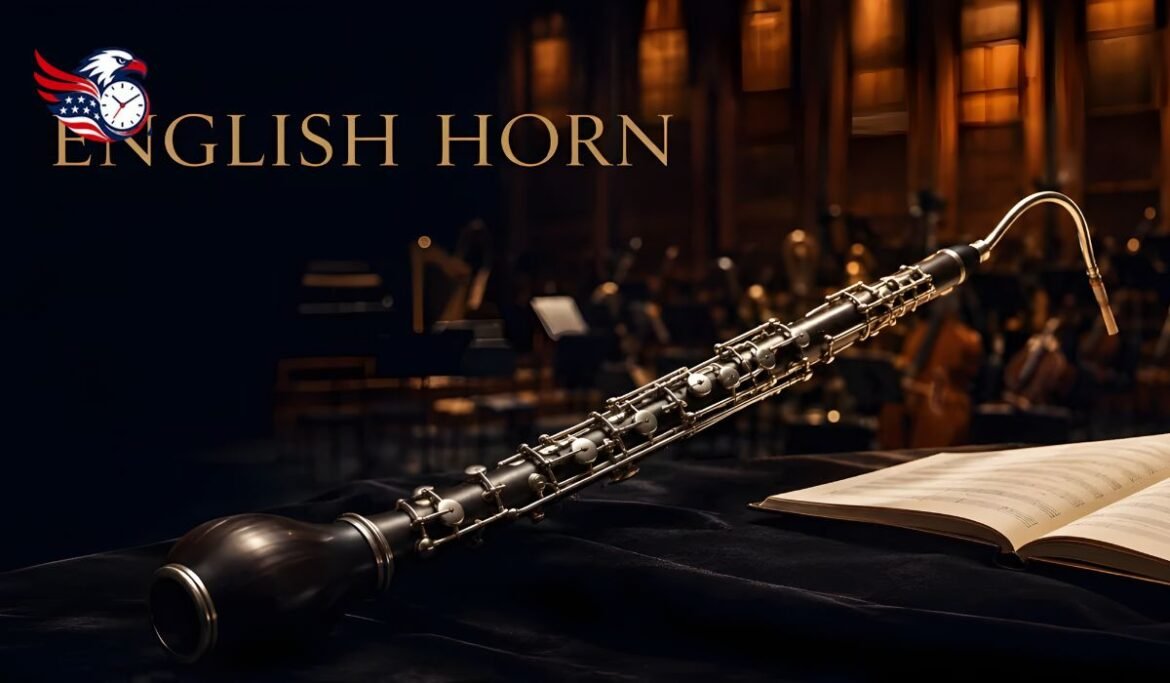
The English horn is one of the most beautiful and misunderstood instruments in the orchestra. Many people hear its warm, haunting tone and assume it belongs to the brass family, yet it has nothing to do with horns at all. It is a woodwind instrument, closely related to the oboe, and it holds a special place in classical music because of its rich, emotional sound. This article explains what the English horn is, where it came from, how it works, and why composers still turn to it today.
What Is an English Horn?
The English horn is a double reed woodwind instrument that looks like a longer, curved version of the oboe. It has a distinctive pear-shaped or bulb-shaped bell at the end, which gives it a softer, rounder tone compared to the brighter sound of the oboe. Despite its name, the English horn is not English, and it is not a horn in the brass sense. Musicians often call it by its French name, cor anglais, which simply means the same thing in a different language. The confusion around its name has followed the instrument for centuries, and even experienced music lovers are sometimes surprised to learn the truth.
A Member of the Oboe Family
The English horn belongs to the oboe family and plays in the alto range, meaning its pitch sits between the oboe and the bassoon. It is pitched in the key of F, so when a player reads a written note, the actual sound comes out a fifth lower, much like how a clarinet or saxophone works. The instrument uses a curved metal tube called a bocal to connect the reed to the wooden body, which helps direct the air and gives the sound its smooth, gentle quality. Because of this design, the English horn has a deeper, mellower voice than the oboe, making it ideal for slow, expressive melodies.
The History of the English Horn
The story of the English horn begins in the early 1700s, and it has a fascinating background that many people never learn about. Understanding its roots helps explain why the instrument sounds the way it does and why it earned such an unusual name.
Early Origins in Europe
The earliest form of the English horn grew out of an older instrument called the oboe da caccia, which means hunting oboe in Italian. This older instrument had a curved shape that resembled a hunting horn, which is likely where the confusion about its name started. Instrument makers in the region of Silesia, which is now part of modern Poland, are credited with developing the instrument further in the early 1700s. They replaced the older flared wooden bell with the rounded bulb bell that is still used today. Records show that composers were already writing music for this new instrument by the 1720s, proving how quickly it caught the attention of musicians across Europe.
The name itself likely came from a mistranslation. Some historians believe the original German word for the instrument sounded like the word for angelic, which later got mixed up with the word English during translation. Over time, the name simply stuck, even though it has no real connection to England, adding a small layer of mystery to the instrument’s story.
Growing Popularity in the 1800s
For many years, the English horn was used only occasionally in orchestras. That changed in the nineteenth century when major composers began writing important solo parts for it. Richard Wagner featured the instrument in his 1845 opera Tannhäuser, which helped convince other composers that the English horn deserved a permanent place in the orchestra. Soon after, composers such as Hector Berlioz and Antonín Dvořák wrote some of the most famous passages in classical music for this instrument. Dvořák’s Symphony No. 9, known as the New World Symphony, contains a slow, gentle English horn solo in its second movement that remains one of the most recognized melodies in all of classical music. These moments helped transform the English horn from a rarely used instrument into a beloved voice within the modern orchestra.
How the English Horn Produces Its Sound
The English horn creates sound through a process shared by all double reed instruments, though the details make its tone unique. When a player blows air through the reed, two thin pieces of cane vibrate against each other very quickly. This vibration travels through the bocal and into the wooden body, where the keys and tone holes shape the pitch. The wooden body is usually made from a dense material such as grenadilla wood, which helps produce a warm, focused tone.
The Double Reed and Bocal
The double reed is arguably the most important part of the entire instrument, since it is where the sound truly begins. Players often make small adjustments to their reeds, shaving the cane slightly thinner or thicker to control tone and pitch. The bocal, which is the curved metal tube connecting the reed to the body, also plays a major role in shaping the instrument’s voice, giving it a softer edge compared to the more direct sound of the straight oboe. Learning to control these small parts takes years of practice, which is why skilled English horn players are highly respected among musicians.
English Horn vs Oboe: What Is the Difference?
Many listeners struggle to tell the English horn and the oboe apart, especially since both instruments look similar and use double reeds. The most obvious visual difference is length and shape. The English horn is noticeably longer than the oboe and ends in a rounded bulb bell, while the oboe has a straight, flared bell. In terms of sound, the oboe has a brighter, more piercing tone, while the English horn produces a deeper, mellower voice that many describe as sounding almost like a human voice singing softly. This is one reason composers often choose the English horn when they want to express sadness, longing, or quiet reflection in a piece of music.
Famous Uses of the English Horn in Classical Music
The English horn has appeared in some of the most memorable works in classical music history. A few well-known examples include:
- Antonín Dvořák’s New World Symphony, featuring a gentle solo in the second movement
- Hector Berlioz’s Symphonie fantastique, where the instrument creates a lonely, distant echo
- Richard Wagner’s opera Tannhäuser, one of the earliest major orchestral uses
- Jean Sibelius’s The Swan of Tuonela, built almost entirely around the English horn’s voice
- William Grant Still’s Afro-American Symphony, which highlights the instrument’s expressive range
These pieces show just how flexible the instrument can be, moving from quiet sorrow to gentle warmth depending on the composer’s intention.
The English Horn in Orchestras Today
In a modern symphony orchestra, the English horn is usually played by an oboist who switches instruments for specific passages, though larger orchestras sometimes employ a dedicated player. It sits within the woodwind section alongside flutes, clarinets, and bassoons, but its solo moments often stand out because of their emotional weight. Film composers have also embraced the instrument, using it in soundtracks to create feelings of nostalgia, sadness, or quiet beauty, introducing it to millions of listeners who may never step inside a concert hall.
Learning to Play the English Horn
Many musicians who play the English horn begin their training on the oboe first, since the two instruments share similar fingerings and reed techniques. Once a player becomes comfortable with the oboe, moving to the English horn means adjusting to its larger reed, longer body, and different breath support. The instrument requires strong control over air pressure, since even small changes in breath can affect pitch and tone quality.
Skills Needed
Patience is essential for anyone learning this instrument, since making and adjusting reeds alone can take months to master. Good posture and steady breathing also matter, as the English horn demands more air support than smaller woodwinds. Students often spend years developing the fine muscle control needed in their lips and fingers before they can play smooth, expressive melodies. Despite the challenges, many musicians find the instrument deeply rewarding because of the emotional depth it brings to a performance.
Why the English Horn Still Matters
The English horn continues to hold a special place in orchestras, film scores, and chamber music because of its unmatched emotional range. Few instruments can capture quiet sorrow or gentle warmth as effectively, which is why composers keep returning to it generation after generation. Its unusual history, confusing name, and unforgettable sound all combine to make it one of the most interesting instruments in the woodwind family. For listeners, recognizing its voice can deepen their appreciation of the music they hear, whether in a concert hall or a film soundtrack.
Final Thoughts
The English horn may carry a misleading name, but there is nothing misleading about the beauty of its sound. From its early days in eighteenth century Europe to its starring roles in symphonies by Dvořák, Sibelius, and Berlioz, this instrument has proven its lasting value in classical music. Its warm, alto voice continues to move audiences today, whether played in a grand concert hall or heard quietly in the background of a film. For anyone curious about orchestral instruments, the English horn offers a wonderful example of how history, craftsmanship, and emotion can come together in a single, unforgettable sound.
Frequently Asked Questions (FAQs)
1. Is the English horn actually from England?
No, the English horn has no historical connection to England. Its name likely came from a translation mix-up centuries ago, and it probably originated in Central Europe instead.
2. Is the English horn a brass instrument?
No, the English horn is a woodwind instrument that uses a double reed, just like the oboe and bassoon, even though its name includes the word horn.
3. What is the difference between an English horn and an oboe?
The English horn is longer, has a rounded bulb-shaped bell, and produces a deeper, mellower tone compared to the brighter, more direct sound of the oboe.
4. Why does the English horn sound so sad or emotional?
Its deep, alto range and rounded tone naturally sound calm and reflective, which is why composers often choose it for slow, emotional passages in their music.
5. Is the English horn hard to learn?
Yes, it takes real dedication, especially because players must learn to make and adjust their own reeds while also mastering breath control and finger technique.
6. Do oboe players usually play the English horn too?
Yes, most English horn players start on the oboe first, since the two instruments share similar fingering systems and reed-making skills.
7. What famous pieces feature the English horn?
Well-known examples include Dvořák’s New World Symphony, Sibelius’s The Swan of Tuonela, and Berlioz’s Symphonie fantastique, all of which showcase its expressive voice.
Read Next: Best Fossil Smartwatch Deals 2026: Where to Buy for the Lowest Price






One thought on “English Horn Explained: History, Sound, and Uses in Classical Orchestras Today”
Comments are closed.