
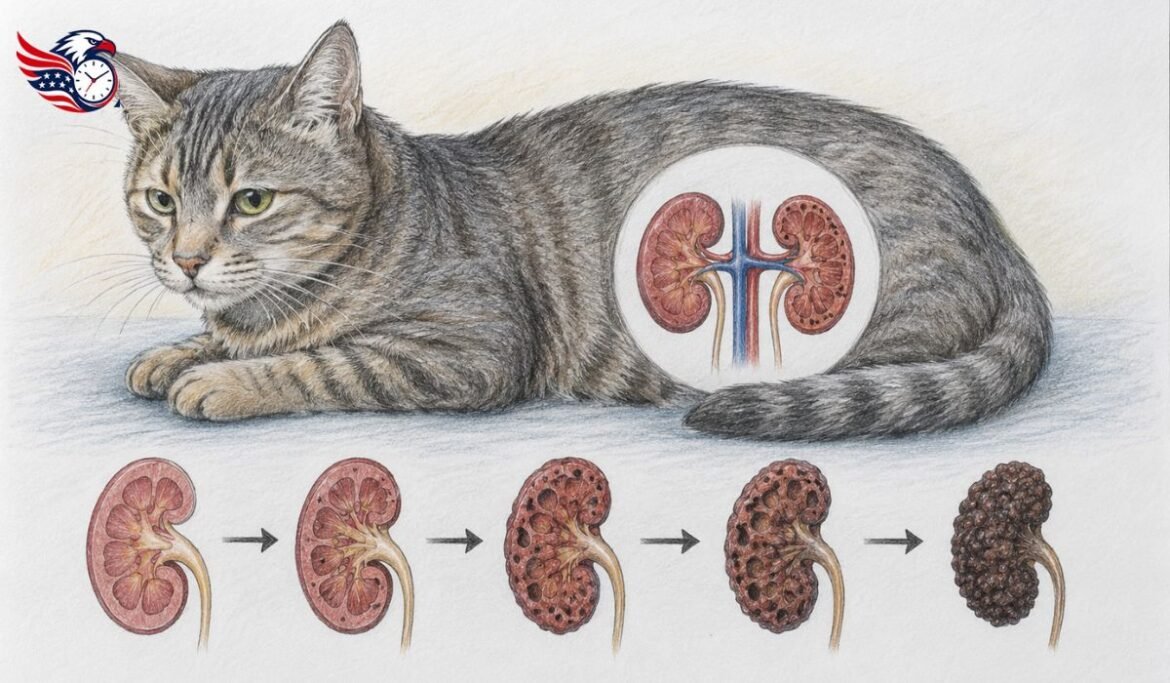
If your cat was just diagnosed with kidney disease, you are probably scared and looking for real answers. It’s one of the most common health problems in older cats, and it can feel overwhelming to hear the words “kidney failure” from your vet. The good news is that a diagnosis is not the end of the story. Many cats live for months, and often years, after they are first diagnosed. How long your cat will live depends mostly on how early the disease was caught, which stage it is in, and how well it responds to treatment. This guide covers what kidney disease is, what the real survival numbers look like, and how to help your cat feel better for as long as possible.
What Is Kidney Disease in Cats?
A cat’s kidneys filter waste out of the blood and keep the body’s fluids balanced. When they’re damaged, waste products build up in the bloodstream instead of leaving through urine, and over time this makes a cat feel sick, tired, and less interested in food. Kidney disease in cats is usually chronic, developing slowly over months or years. It is very common in senior cats, and a large share of cats over ten already show some reduced kidney function, even before diagnosis.
Chronic kidney disease differs from a sudden kidney injury, which can happen quickly after poisoning, dehydration, or a blockage. The kidneys are surprisingly good at compensating for damage, so a cat can lose a large portion of function before any symptoms appear. That’s why regular blood work matters so much as your cat ages, even if they seem healthy.
The Four Stages of Kidney Disease
Veterinarians classify kidney disease into four stages, based mainly on a blood test called creatinine along with other markers like SDMA. This staging system helps your vet understand how much kidney function has already been lost and what treatment plan makes sense.
In stage one, kidney values are close to normal, though subtle changes may show up in urine tests, and cats usually look healthy. Stage two is mild disease, where waste levels start rising and some cats drink more water. Stage three is moderate, with noticeable weight loss, poor appetite, and more frequent urination. Stage four is the most advanced, where cats often show vomiting, extreme lethargy, and a strong loss of interest in food. Knowing the stage tells your vet how aggressively to treat the disease and what to expect.
How Long Do Cats Live With Kidney Disease?
This is the question every worried cat owner wants answered clearly, so let’s look at the numbers reported by veterinary researchers who have studied hundreds of cats over time.
Cats diagnosed early, in stage two, have the best outlook, living a little over three years on average, with some reaching eight years or more with good management. Cats diagnosed in stage three typically live close to two years on average, though many live longer with consistent treatment. Cats diagnosed in stage four have a much shorter survival time, often just weeks to a few months. Across all stages combined, average survival from diagnosis lands around two years.
These are averages, not guarantees. Every cat is different, and factors like age, other health conditions, and how quickly treatment starts can shift these numbers in either direction. A cat diagnosed early and cared for consistently can sometimes far outlive the average for their stage.
Early Signs You Might Miss
Early symptoms are easy to overlook, especially in a cat that still seems playful and affectionate. One of the earliest changes is increased thirst, so your cat may visit the water bowl more often or you may notice you’re refilling it faster than before. Along with this comes more frequent urination, since the kidneys struggle to concentrate urine properly.
Some cats also become slightly less interested in food, or lose weight that’s hard to notice without regular checking. Coat quality can dull too, since a cat that isn’t feeling well often grooms less. None of these signs scream “kidney disease” on their own, which is why regular vet checkups with blood work matter so much once your cat reaches middle age.
Symptoms in Later Stages
As kidney disease moves into the moderate and advanced stages, the signs become harder to ignore. Vomiting becomes more common, often because waste products in the blood make a cat feel nauseated. Appetite loss becomes more serious, and some cats will only eat small amounts or refuse food for stretches of time. Weight loss and muscle wasting often follow, giving a cat a noticeably thinner appearance along the spine and hips.
Lethargy is another major sign, and a cat who used to greet you at the door may start sleeping most of the day. Some cats develop bad breath with an unusual, ammonia-like smell, and high blood pressure is common at this stage, sometimes causing sudden vision problems. If you notice several of these signs together, get an urgent vet visit rather than waiting.
What Affects How Long Your Cat Will Live
Several factors influence survival. The stage at diagnosis is the biggest one, since catching the disease early gives far more room to slow it down. A cat’s overall health matters too, since kidney disease alone is often easier to manage than kidney disease combined with an overactive thyroid, heart disease, or high blood pressure.
How closely you and your vet manage the disease matters too, since cats with regular checkups and bloodwork tend to do better. Hydration is another major piece, since dehydration strains kidneys that are already struggling, and how well a cat takes to a prescription kidney diet can make a real difference.
Diet and Treatment That Can Extend Life
Nutrition is one of the most powerful tools for managing kidney disease, and most vets recommend a therapeutic renal diet once a cat reaches stage two or beyond. These diets are built around a few key goals:
- Lower phosphorus to reduce the kidneys’ workload and slow disease progression
- Moderate, high-quality protein to ease strain while protecting muscle mass
- Higher moisture content, often through wet food, to support hydration
- Added omega-3 fatty acids to reduce inflammation and support blood flow to the kidneys
Beyond diet, your vet may recommend fluid therapy, given at the clinic or taught to owners for home use, to flush waste and prevent dehydration. Medications may also control blood pressure, support red blood cell production if anemia develops, or manage phosphorus. None of this cures kidney disease, but together it can slow it and keep your cat more comfortable.
Home Care Tips for Cats With Kidney Disease
Small changes at home can make a real difference. Keep fresh water available in multiple spots around the house, since cats often drink more when it’s easy to reach, and a fountain can encourage more drinking than a still bowl.
Stick closely to the diet your vet recommends, even if it takes patience. Some cats reject a new food at first, so mixing it gradually with their old food over a week or two works better than switching all at once. Keep an eye on weight, appetite, and energy, and note anything unusual for your vet. Reducing stress helps too, since anxious cats eat and groom less. A quiet resting spot away from noise or other pets goes a long way.
When Kidney Disease Reaches the Final Stage
Eventually, most cats with chronic kidney disease reach a point where the kidneys can no longer keep up, even with treatment. Signs of this final stage include a near-total loss of appetite, frequent vomiting, extreme weakness, and an unpleasant breath odor. Some cats become withdrawn, hiding more and losing interest in everything around them.
This stage is emotionally difficult. Your vet can help you assess your cat’s quality of life honestly and talk through options, including comfort-focused care or humane euthanasia when the time feels right. There is no single right answer, and what matters most is that your cat is not suffering and spends their final days comfortable and loved.
Final Thoughts
Hearing that your cat has kidney disease is never easy, but it doesn’t mean your time together is almost over. Many cats live happily for years after diagnosis, especially when caught early and managed with the right diet, hydration, and veterinary care. Pay attention to small changes, like extra thirst or a lighter appetite, since early detection is the biggest factor in how long your cat will live. Work closely with your vet, stay consistent with treatment, and focus on your cat’s comfort day by day.
Frequently Asked Questions (FAQs)
1. Can a cat live a normal lifespan with kidney disease?
Some cats diagnosed early, especially in stage one or two, can live for several more years with proper diet and treatment. It really depends on the stage at diagnosis and how consistently the disease is managed.
2. What is the first sign of kidney failure in cats?
Increased thirst and more frequent urination are usually the earliest noticeable signs. These changes can be subtle, so many owners don’t notice until routine bloodwork picks up the problem.
3. Is kidney disease in cats painful?
Kidney disease itself is not usually described as painful, but the nausea and appetite loss that come with it can make a cat feel quite unwell. Managing symptoms helps keep your cat more comfortable.
4. Should I force-feed my cat with kidney disease?
Forcing food is generally not recommended, since it can create a lasting dislike of that food or mealtime. Instead, talk to your vet about appetite stimulants or gentle ways to encourage eating.
5. How often should a cat with kidney disease see the vet?
Most vets recommend checkups every three to six months, depending on the stage, so treatment can be adjusted as needed. Cats in later stages often need more frequent monitoring.
6. Can diet alone control kidney disease in cats?
Diet plays a major role and can slow the disease significantly, but it usually works best alongside hydration support and medication. Your vet can help build a full plan suited to your cat’s stage.
7. How do I know when it’s time to consider euthanasia?
This is a personal decision best made with your vet’s guidance, usually when a cat stops eating, loses significant weight, or no longer seems to enjoy daily life. A quality-of-life discussion with your vet can help you feel confident in the choice.
Read Next: How to Transition Your Dog to Farmer Dogs Food: Step-by-Step Feeding Guide






One thought on “How Long Do Cats Live With Kidney Disease? Stage-by-Stage Survival Guide”
Comments are closed.