
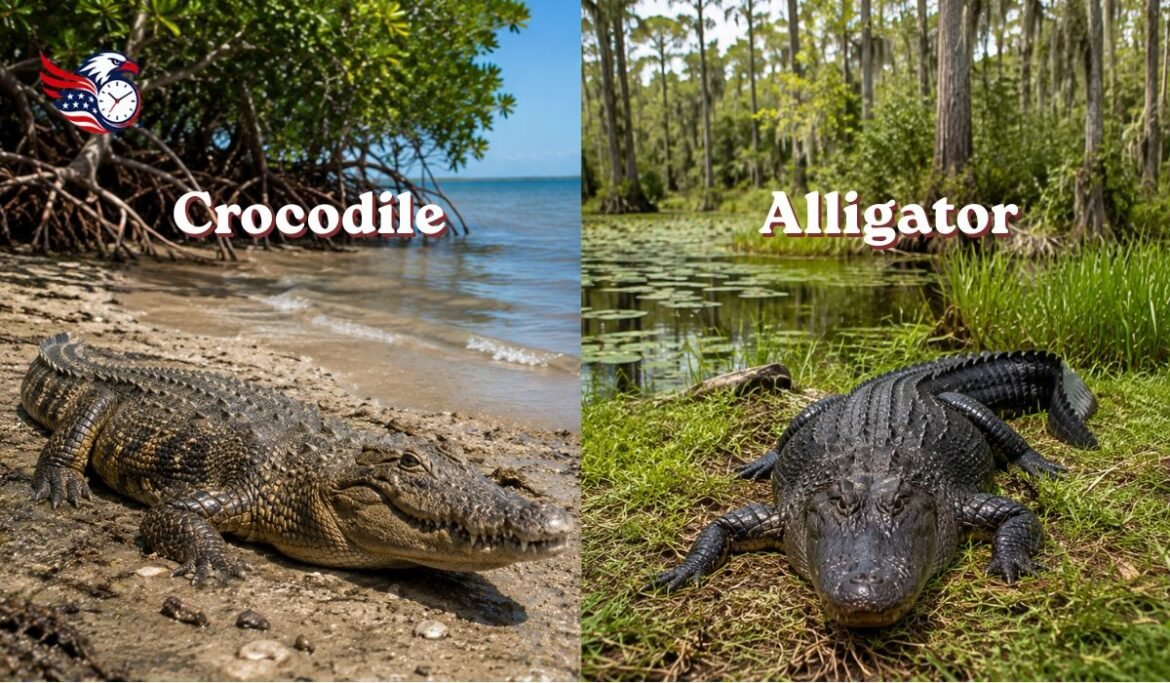
Florida is home to two large reptiles that often get mixed up: the American alligator and the American crocodile. Both animals are big, both have powerful jaws, and both spend most of their lives in or near water. But if you look closely at where each one lives, you will find real differences. Understanding Florida crocodile vs alligator habitat patterns can help you know what you are looking at the next time you spot one near a canal, a lake, or a stretch of coastline. This guide walks through where each animal lives, why their homes are so different, and what that means for people who live in or visit the Sunshine State.
Two Reptiles, One State
Florida is the only place in the United States where alligators and crocodiles live side by side. That alone makes the state unusual. Most people picture alligators when they think of Florida swamps, and that makes sense since alligators are far more common. Crocodiles, on the other hand, are rarer and live in a much smaller part of the state. Even though these two animals often get compared side by side, their day-to-day living space is one of the clearest ways to tell them apart. Once you understand their habitat needs, spotting the difference becomes much easier, even from a distance.
Where Alligators Choose to Live
American alligators are freshwater animals through and through. They live in lakes, rivers, swamps, marshes, and ponds across the entire state of Florida. They also range well beyond Florida, showing up in wetlands from North Carolina down through Texas. This wide range is one reason alligators are such a familiar sight across the southeastern United States, not just in Florida.
Freshwater Havens Across Florida
Alligators prefer slow-moving water with plenty of plant cover. Places like the Everglades, Lake Okeechobee, and countless smaller ponds and canals across suburban Florida all support large alligator populations. They can tolerate a bit of brackish water for short periods, but they do not have the special glands needed to handle salt water for long stretches. Because of this, you will rarely find a healthy alligator living permanently in the ocean or in a salty bay. Their bodies are simply built for fresh water, and that shapes almost every part of where they choose to settle down.
Where Crocodiles Choose to Live
American crocodiles tell a very different story. In the United States, they are found almost only in the southern tip of Florida, mainly around Biscayne Bay, the Florida Keys, and the coastal edges of Everglades National Park. Unlike alligators, crocodiles are built for salty and brackish water. They have special glands near their eyes that let them get rid of extra salt, which allows them to live comfortably in coastal lagoons, mangrove swamps, and tidal creeks.
Life in Salt and Brackish Water
This salt tolerance changes everything about where crocodiles can survive. While alligators spread out across freshwater habitats statewide, crocodiles stay close to the coast, where fresh water meets the sea. Mangrove forests are a favorite spot because the tangled roots offer shelter and a steady supply of fish and small prey. Crocodiles also use Florida’s extensive canal system, which sometimes brings them into contact with freshwater areas, but their true home base remains coastal and brackish.
The Only Place on Earth They Share a Home
South Florida holds a rare distinction. It is the only place on the planet where American alligators and American crocodiles naturally live in the same general area. This overlap happens mainly in the brackish zones near Florida Bay, where fresh water flowing from the Everglades meets the salty water of the Gulf and the Atlantic. In these mixed-salinity areas, both species can survive, though they usually stick to their preferred conditions within that shared space. Alligators tend to stay closer to the freshwater edges, while crocodiles hang back nearer the saltier water. Sightings of both animals in the same waterway do happen, but true conflict between them is extremely rare, since they generally avoid each other and stick to their own routines.
Why Their Habitats Are So Different
The habitat gap between these two reptiles comes down to biology. Crocodiles evolved with salt glands that let them process and expel excess salt from their bodies. Alligators never developed this feature, which is why salt water is hard on their systems over time. This single biological difference explains almost everything about their separate ranges.
Body shape plays a role too. A few quick physical traits line up closely with where each animal lives.
- Alligators have broad, U-shaped snouts built for crushing turtles and other hard-shelled prey found in freshwater lakes and rivers.
- Crocodiles have narrower, V-shaped snouts suited for snapping up fish in open coastal water.
- Alligators are usually dark, almost black, which helps them blend into muddy freshwater habitats.
- Crocodiles tend to be lighter, gray-green in color, matching the sandier, brighter tones of coastal mangrove zones.
These physical traits are not random. They developed over a long time to match the specific habitats each species calls home.
Temperature and Range Limits
Cold tolerance is another piece of the puzzle. Alligators can handle cooler temperatures fairly well, which is part of why they range so far north into the Carolinas. Crocodiles are far more sensitive to cold and cannot survive in areas that dip below a certain temperature for long. This is a major reason crocodiles stay locked into the very southern tip of Florida and do not spread north the way alligators do. Even a modest cold snap can be dangerous for a crocodile, while alligators are known to survive freezing conditions by keeping just their nostrils above an icy surface.
Population Numbers Tell a Story
The size of each population also reflects their different habitat ranges. Florida is home to more than a million alligators spread across nearly every county with wetlands. Crocodiles, by comparison, number only in the low thousands, and their entire range is confined to a small corner of South Florida. This gap in numbers is not about one species being tougher than the other. It comes down to available habitat. Alligators simply have far more suitable freshwater space across the state, while crocodiles are limited to a narrow strip of coastline that meets their specific needs.
How Habitat Affects What They Eat
Where these animals live also shapes what ends up on their menu. Alligators living in freshwater lakes and marshes feed on fish, turtles, birds, and small mammals that pass through their territory. Crocodiles living in coastal mangroves and brackish lagoons rely more heavily on saltwater and estuary fish, along with crabs and other creatures found in tidal zones. Their diets are not fixed by choice alone. They are a direct result of what is actually available in the habitat each species calls home.
Human Encounters and Habitat Overlap
Because alligators live in so many freshwater areas across Florida, including retention ponds, golf course lakes, and residential canals, people run into them far more often than crocodiles. Crocodiles are shy by nature and tend to avoid people, and since their range is limited to remote coastal and mangrove areas, most Florida residents never encounter one at all. Visitors hoping to see a wild crocodile usually need to head to specific spots like the Florida Keys or the southern edges of Everglades National Park, while alligator sightings can happen almost anywhere there is fresh water in the state.
Conservation and Changing Habitats
Habitat protection looks different for each species too. Alligator populations are considered stable and healthy across their wide range, partly because there is so much freshwater habitat available to them throughout the Southeast. Crocodiles face a tougher road. Their narrow coastal range makes them more vulnerable to habitat loss from coastal development, changes in water flow, and rising salinity levels. Restoration projects in the Everglades that aim to send more fresh water toward the coast can actually help crocodile nesting areas by keeping salinity levels in a healthier range. Because their habitat is so specific and limited, even small environmental shifts can have a bigger impact on crocodiles than on the more widespread alligator population.
Final Thoughts
The habitat differences between these two reptiles say a lot about how each one survives. Alligators thrive because they can live almost anywhere there is fresh water, from wild swamps to suburban ponds. Crocodiles survive by sticking to a narrow but specialized coastal niche where salt water and warm temperatures meet their exact needs. When you compare Florida crocodile vs alligator habitat patterns side by side, you see two very different survival strategies working in the same state. Next time you spot a large reptile near the water in Florida, take a look at the surroundings. If it is a freshwater lake or marsh, you are almost certainly looking at an alligator. If it is a mangrove-lined coastal creek in the far south of the state, there is a real chance you are looking at one of Florida’s rarer residents, the American crocodile.
Frequently Asked Questions (FAQs)
1. Why do alligators live in fresh water while crocodiles prefer salt water?
Crocodiles have special glands that remove extra salt from their bodies, letting them live comfortably in salty and brackish water. Alligators lack this feature, so they stick to freshwater lakes, rivers, and marshes instead.
2. Where in Florida can you see both alligators and crocodiles together?
The brackish zones near Florida Bay and the southern edge of Everglades National Park are the best spots, since this is the only place on Earth where both species naturally share the same general area.
3. Are crocodiles more dangerous than alligators because of where they live?
Danger has more to do with individual behavior than habitat, though crocodiles are generally considered more likely to view people as prey, while alligators tend to avoid humans and retreat when possible.
4. Why are there so many more alligators than crocodiles in Florida?
Alligators have access to freshwater habitat across the entire state and beyond, while crocodiles are limited to a small stretch of southern coastline, which naturally caps how many crocodiles the environment can support.
5. Can alligators survive in salt water for long periods?
Alligators can tolerate brief exposure to brackish water, but they lack the salt glands crocodiles have, so long-term survival in salty environments is difficult for them.
6. Do crocodiles ever move into freshwater areas in Florida?
Yes, thanks to Florida’s canal system, crocodiles sometimes travel into freshwater zones, though their true preferred habitat remains coastal, brackish, and saltwater environments.
7. Why don’t crocodiles live further north in Florida like alligators do?
Crocodiles are much more sensitive to cold temperatures than alligators, so they stay confined to the warm southern tip of the state where cold snaps are rare.
Read Next: How Long Do Cats Live With Kidney Disease? Stage-by-Stage Survival Guide





One thought on “Florida Crocodile vs Alligator: Habitat Differences Explained (2026)”
Comments are closed.