
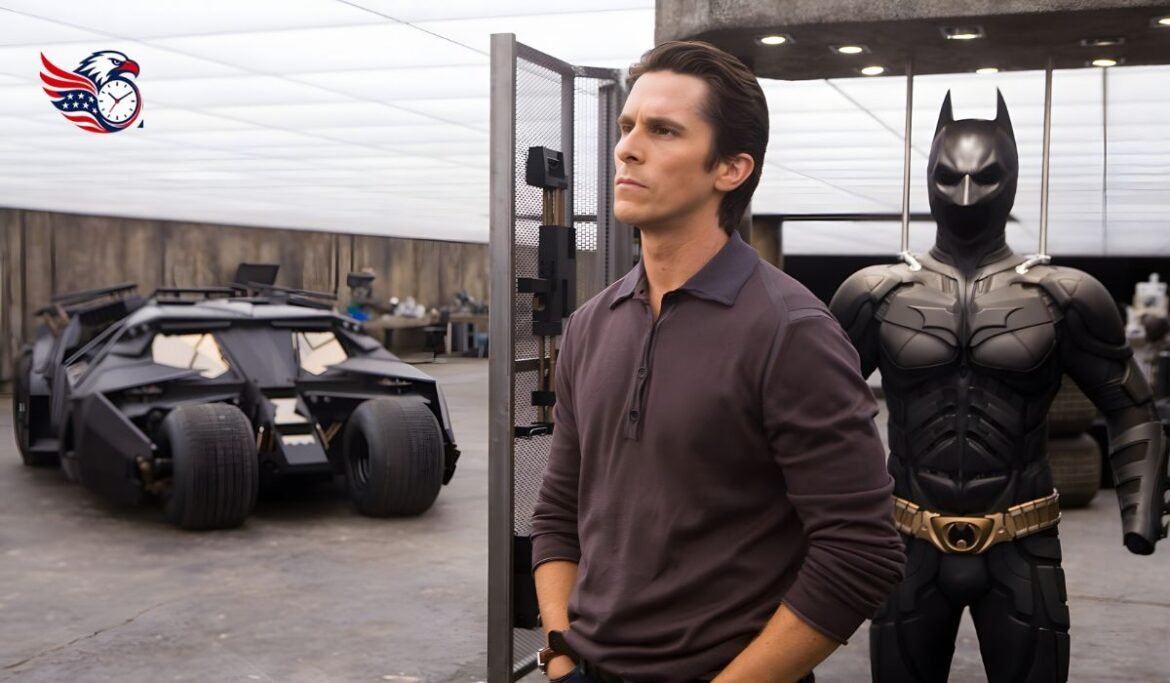
For many fans, Christian Bale is the actor who brought Batman back to life on the big screen. His three Christian Bale Batman movies, known together as The Dark Knight Trilogy, changed how people saw superhero films. These movies were not just about a hero in a mask. They told a grounded, emotional story about fear, justice, and one man’s fight to save his city. Directed by Christopher Nolan, the trilogy remains one of the most talked-about runs in modern film history. This guide walks through the full timeline, the watch order, the cast, and why these films still matter to viewers around the world today.
Who Is Christian Bale and Why His Batman Matters
Christian Bale is a Welsh actor known for taking on demanding roles with full commitment. Before he wore the cape, Batman on screen had leaned toward bright colors and campy fun. Bale’s version was different. He brought a quiet intensity to Bruce Wayne, showing both the wounded child who lost his parents and the disciplined fighter he became. His performance balanced two sides of one character: the public businessman and the hidden vigilante working at night. This dual approach gave the role a sense of realism not seen before in a Batman film.
Many critics and longtime fans consider Bale’s take on the character one of the most complete portrayals of Bruce Wayne ever filmed. He trained physically for the part and studied the emotional weight of loss that drives the character forward. This is part of why his three films are still discussed and rewatched years after their release.
The Dark Knight Trilogy: An Overview
The three Christian Bale Batman movies were released across seven years, from 2005 to 2012. Each film was written and directed by Christopher Nolan, who also helped shape the story with co-writers David S. Goyer and, later, his brother Jonathan Nolan. The trilogy follows Bruce Wayne from the early days after his parents’ murder through his transformation into Batman, his battle against Gotham’s criminal underworld, and finally his last stand to protect the city he loves.
Unlike earlier Batman films, this series treated its world with a grounded, realistic tone. Gotham City felt like a real place, and the threats Batman faced felt like consequences of real social problems, such as corruption, fear, and class division. This approach helped the films connect with audiences who wanted more than simple action. It gave the story emotional stakes that stayed with viewers long after the credits rolled.
Watch Order and Timeline
If you are new to these films or want to revisit them properly, the good news is simple. The three movies should be watched in the exact order they were released. There is no confusing timeline to sort out, which makes this one of the easiest superhero series to follow from start to finish.
Batman Begins (2005)
The story opens with Bruce Wayne as a young man haunted by his parents’ death. He travels the world, learns combat and detective skills from a mysterious group called the League of Shadows, and eventually returns to Gotham to fight crime as Batman. This film introduces key figures like Alfred Pennyworth, Jim Gordon, and Lucius Fox, along with the villain Ra’s al Ghul and the fear-inducing Scarecrow. It lays the foundation for everything that follows and explains why Bruce chooses to become a symbol rather than just a man.
The Dark Knight (2008)
The second film raises the stakes dramatically. Batman, now an established protector of Gotham, faces his greatest challenge yet: the Joker. This version of the character is chaotic and unpredictable, testing Batman’s moral limits at every turn. The film also explores the tragic fall of district attorney Harvey Dent, who becomes a symbol of how easily good intentions can turn dark. This entry is widely seen as the strongest of the three, praised for its tension, pacing, and unforgettable performances.
The Dark Knight Rises (2012)
The final chapter takes place eight years after the events of the second film. Batman has gone into hiding, and Gotham faces a new threat in Bane, a powerful and calculated adversary who nearly breaks Batman both physically and mentally. This movie also introduces Selina Kyle, better known as Catwoman, adding another layer to the story. It closes out the trilogy with a mix of large-scale action and a personal ending for Bruce Wayne’s journey.
The Cast Behind the Trilogy
Part of what makes these films so memorable is the strength of the cast around Christian Bale. Michael Caine plays Alfred, Bruce’s loyal butler and father figure, bringing warmth and wisdom to nearly every scene he is in. Gary Oldman plays Jim Gordon, a rare honest voice within Gotham’s police force. Morgan Freeman plays Lucius Fox, the brilliant mind behind Batman’s gadgets and technology. These three actors appear in all three films, giving the trilogy a strong sense of continuity.
Beyond the core group, each film brought in powerful new performers. Cillian Murphy played the Scarecrow across multiple entries. Heath Ledger’s performance as the Joker in the second film left a lasting mark on the industry. Tom Hardy, Anne Hathaway, Joseph Gordon-Levitt, and Marion Cotillard joined the cast for the final film, rounding out one of the most talked-about ensembles in modern film history.
Villains That Shaped Bale’s Batman
Every great hero needs a great challenge, and this trilogy delivered a different kind of threat in each film. In the first movie, Ra’s al Ghul represents an idea more than a man, a belief that Gotham is too far gone to save. The Scarecrow adds a psychological layer, using fear as his main weapon.
The second film brought the Joker, a character built on chaos rather than clear motives. He does not want money or power. He wants to prove that anyone can be broken under the right pressure, and this makes him one of the most unsettling villains ever put on screen.
In the final film, Bane offers something different again. He is not driven by fear or chaos but by control and physical dominance. He breaks Batman down early in the story, forcing Bruce Wayne to rebuild himself from nothing. Each of these three villains pushed Batman in a new direction, which is a big reason the trilogy never felt repetitive.
Why Fans Still Watch These Movies Today
Years after their release, these films remain popular for a few clear reasons:
- The story treats its characters and world seriously, without relying on jokes or shortcuts.
- The action scenes still hold up thanks to practical effects and real locations.
- The themes of fear, justice, and personal sacrifice feel timeless rather than tied to one era.
- Christian Bale’s performance gives the character emotional depth that many other film versions have not matched.
This mix of strong writing, careful direction, and committed acting is why new viewers continue to discover and enjoy the trilogy even now.
Box Office and Cultural Impact
Beyond critical praise, these films were also major commercial successes. Each entry performed well at the box office, with the second and third films both earning over one billion dollars worldwide. Together, the trilogy brought in more than two billion dollars globally, a clear sign of how deeply audiences connected with this version of the character.
The impact went beyond ticket sales, too. This trilogy influenced how studios approached other comic book films in the years that followed, pushing many productions toward more grounded stories and serious tones. It also raised the bar for what audiences expected from a superhero film, showing that this kind of story could be treated with the same respect as any other major drama.
How This Trilogy Changed Superhero Films
Before this series, many comic book films leaned heavily on humor, bright visuals, and simple plots. Christopher Nolan and Christian Bale took a different path. They treated Gotham as a real city with real problems, and they treated Bruce Wayne as a person carrying real trauma. This shift opened the door for other filmmakers to take similar risks with their own comic book adaptations.
The trilogy also proved that a hero does not need to be perfect to be compelling. Bale’s Batman makes mistakes, loses people he cares about, and struggles with doubt. This honesty made the character more human, and it set a new standard that many later films have tried to follow.
Final Thoughts
Christian Bale’s three Batman films remain a high point in modern film history, not just for superhero stories but for filmmaking in general. From the personal loss that opens Batman Begins to the sacrifice that closes The Dark Knight Rises, this trilogy tells one complete, satisfying story. It combines strong acting, thoughtful writing, and a serious take on a character many people thought they already knew. Whether you are watching for the first time or returning for another viewing, these three films still hold up as some of the best in their genre, and Christian Bale’s performance remains the heart of it all.
Frequently Asked Questions (FAQs)
1. How many Batman movies did Christian Bale make?
Christian Bale played Batman in three films, known together as The Dark Knight Trilogy. These are Batman Begins, The Dark Knight, and The Dark Knight Rises, released between 2005 and 2012.
2. What order should I watch the Christian Bale Batman movies in?
You should watch them in release order, starting with Batman Begins, followed by The Dark Knight, and ending with The Dark Knight Rises. The story follows a straight timeline with no flashbacks or jumps that require a different order.
3. Who directed the Christian Bale Batman movies?
All three films were directed by Christopher Nolan, who also helped write each script. His approach gave the trilogy a consistent tone and style across all three entries.
4. Which Christian Bale Batman movie is considered the best?
Most fans and critics point to The Dark Knight as the strongest film in the trilogy. This is largely due to its tense story and Heath Ledger’s widely praised performance as the Joker.
5. Who plays the villains in the Christian Bale Batman movies?
Each film features different villains. Batman Begins includes Ra’s al Ghul and the Scarecrow, The Dark Knight centers on the Joker, and The Dark Knight Rises introduces Bane and Catwoman.
6. Are the Christian Bale Batman movies connected to other DC films?
No, this trilogy exists as its own separate story and is not directly connected to other Batman films or the wider DC film universe. It was designed to stand on its own from start to finish.
7. Why is Christian Bale’s Batman so popular with fans?
Fans often point to the realistic tone, strong supporting cast, and Bale’s committed performance as reasons this version of Batman remains a favorite. The trilogy also tells a complete story with a clear beginning, middle, and end, which makes it easy to watch and enjoy as a whole.
Read Next: Iyanna Faith Lawrence: Everything to Know About Martin Lawrence’s Daughter




One thought on “Christian Bale Batman Movies Guide: Watch Order & Timeline”
Comments are closed.